

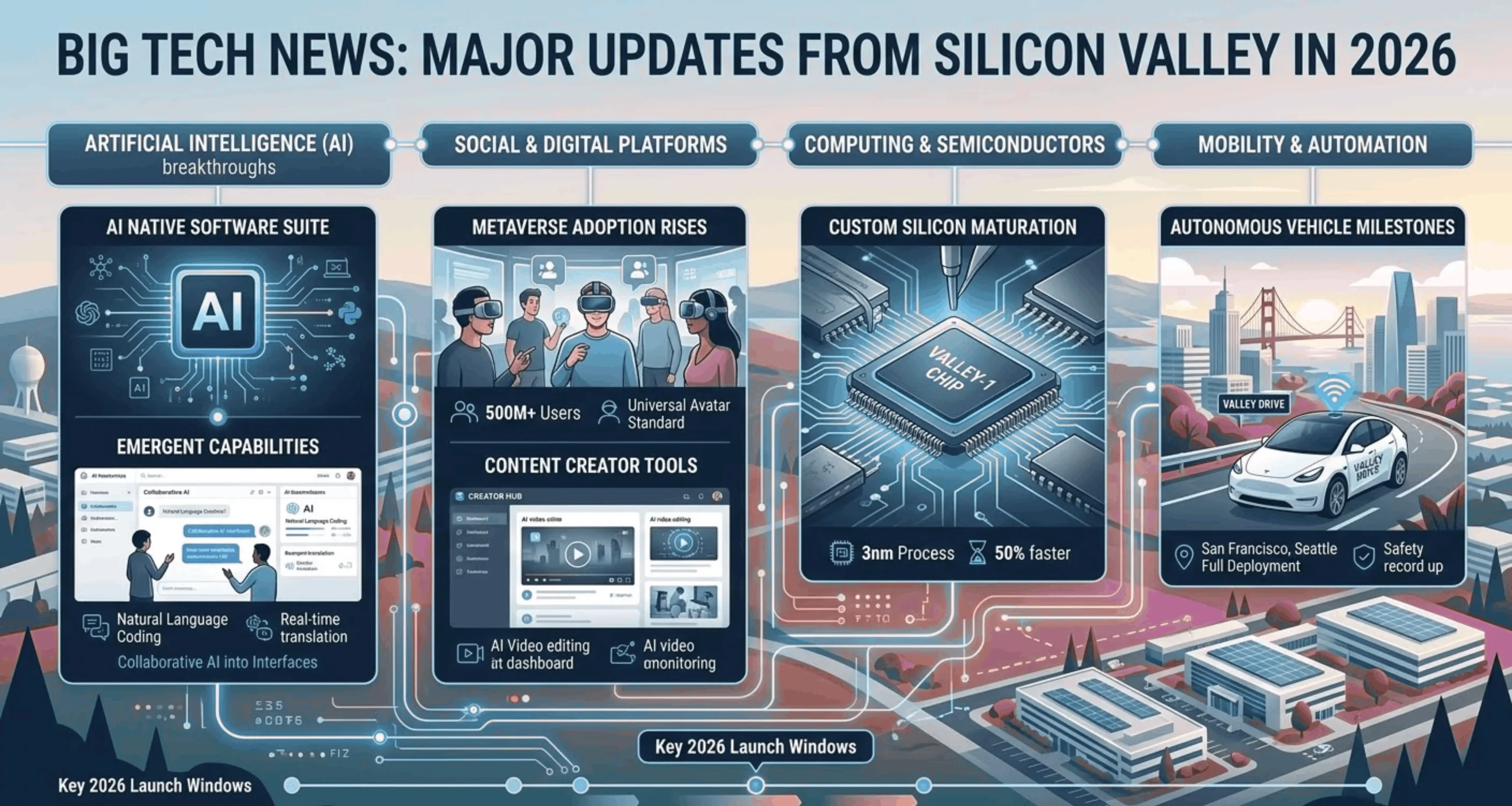
AI Infrastructure Surge and Investment Boom
One of the most remarkable trends in 2026 is the scale of infrastructure investment planned by Big Tech companies. Collectively, technology behemoths including Microsoft, Amazon, Alphabet (Google), Meta, and others are projected to spend as much as $650 billion on artificial intelligence infrastructure this year, marking one of the largest capital expenditure cycles in history. These investments are not limited to silicon chips — they also include power, cooling systems, and data center expansion to handle next‑generation AI workloads, reflecting a shift in the “AI arms race” from semiconductor dominance to all‑around infrastructure capability.
This surge in spending highlights how deeply AI has become embedded in the strategic roadmaps of major tech firms and demonstrates that AI is no longer just software — it’s the backbone of future computing ecosystems worldwide.
Broadcom’s AI Chip Success and Market Signals
AI infrastructure is not only about the high end of the market; semiconductor companies are also seeing enormous demand. For example, Broadcom recently reported a record fiscal quarter with AI‑related revenue more than doubling year‑over‑year as custom silicon and networking solutions become critical components in data centers. This reflects a broader industry pattern where hardware plays a larger role in driving growth and profitability for tech suppliers supporting AI stacks.
This trend signals that Silicon Valley’s tech ecosystem is extending beyond traditional software dominance into deeper hardware integration, particularly in chip design, networking, and scalable compute solutions.
Big Product Launches and Consumer Tech Updates
Beyond infrastructure, consumer technology also remains a key part of Big Tech’s 2026 narrative. Apple’s March 2026 product event introduced a host of new devices aimed at blending affordability with AI readiness, including the MacBook Neo — a budget‑friendly laptop powered by the A18 Pro chip — alongside refreshed iPhone and iPad Air models with upgraded performance and AI capabilities.
These releases indicate that personal computing is entering a new phase where AI and performance are central selling points, even in mid‑tier hardware.
At the same time, AI features continue to be embedded into everyday products and services, making AI not just a backend strategic investment but also a user‑facing experience shaping how Americans interact with devices and applications.
Tensions Between Tech Companies and Government
2026 has also brought political and ethical conflict to the forefront. Major AI company Anthropic has entered a high‑stakes dispute with the U.S. Department of Defense over ethical boundaries, especially concerning the use of its AI system Claude in military projects. This conflict highlights industry‑wide dilemmas about how advanced AI can be responsibly deployed in dual‑use environments.
These tensions reflect broader public policy debates in Washington and Silicon Valley about data control, national security, ethical AI, and the role of private companies in supporting government operations.
Tech Layoffs and Workforce Trends
Despite massive capital deployment, the labor market in Silicon Valley and beyond remains turbulent. Recent reports show that layoffs continue across several technology firms as they restructure for long‑term AI strategies and cost efficiencies. Thousands of tech workers have already lost jobs this year as companies streamline teams and shift resources toward future priorities.
This shakeout is part of a broader trend where organizations optimize for AI‑centric operations and automation, balancing innovation with operational sustainability — a difficult transition for many established tech roles.
Emerging Tech Hubs: Silicon Valley Meets Miami
The traditional dominance of Silicon Valley is being challenged by emerging tech hubs such as Miami, which is seeing increased talent exchange and investment. While San Francisco and the Bay Area still lead in venture capital volume and high‑value deals, Miami’s tech employment is showing stable growth, attracting relocations from major corporations and startups alike.
This diversification of tech ecosystems across the U.S. reflects how talent and capital flows are adapting to remote and hybrid work trends, affordability concerns, and lifestyle preferences among the workforce.
Silicon Valley Events and Innovation Ecosystems
Tech events like the AI For Future trade fair in San Francisco in March 2026 are bringing global AI innovators together to showcase frontier technology, investment opportunities, and international collaborations. These events highlight Silicon Valley’s ongoing role as an innovation hub but also underscore the importance of global connectivity and cross‑border partnerships in future tech development.
Summits, conferences, and pitch competitions serve as critical platforms for emerging startups and established companies alike to share insights and scale new ideas into market impact.
Tech Policy and Infrastructure Debates
The rapid pace of technological investment has also sparked discussions about infrastructure resilience — including how data centers and AI compute facilities impact local power grids and environmental goals. American tech companies are pledging to pay higher energy costs to sustain data center operations while minimizing consumer impact, a sign that the demands of AI are reshaping national infrastructure strategy.
This trend underscores how Big Tech’s growth is increasingly intertwined with national energy policy, sustainability efforts, and regional planning needs.
Conclusion: The Silicon Valley Tech Story in 2026
Big Tech in 2026 is marked by massive investment in AI infrastructure, record hardware and software growth, product innovation, and political challenges that test the boundaries of corporate governance and ethical responsibility. From data center power commitments and groundbreaking chip performance to geopolitical conflicts involving AI deployment, the technology sector is shaping not just digital life but national priorities in business, security, and economic policy.
As these developments continue to unfold, staying informed about major Big Tech trends is essential for investors, professionals, and tech enthusiasts who want to understand where the future of innovation is heading.
For more cutting‑edge technology updates and Silicon Valley news, visit World Stage Today.
