

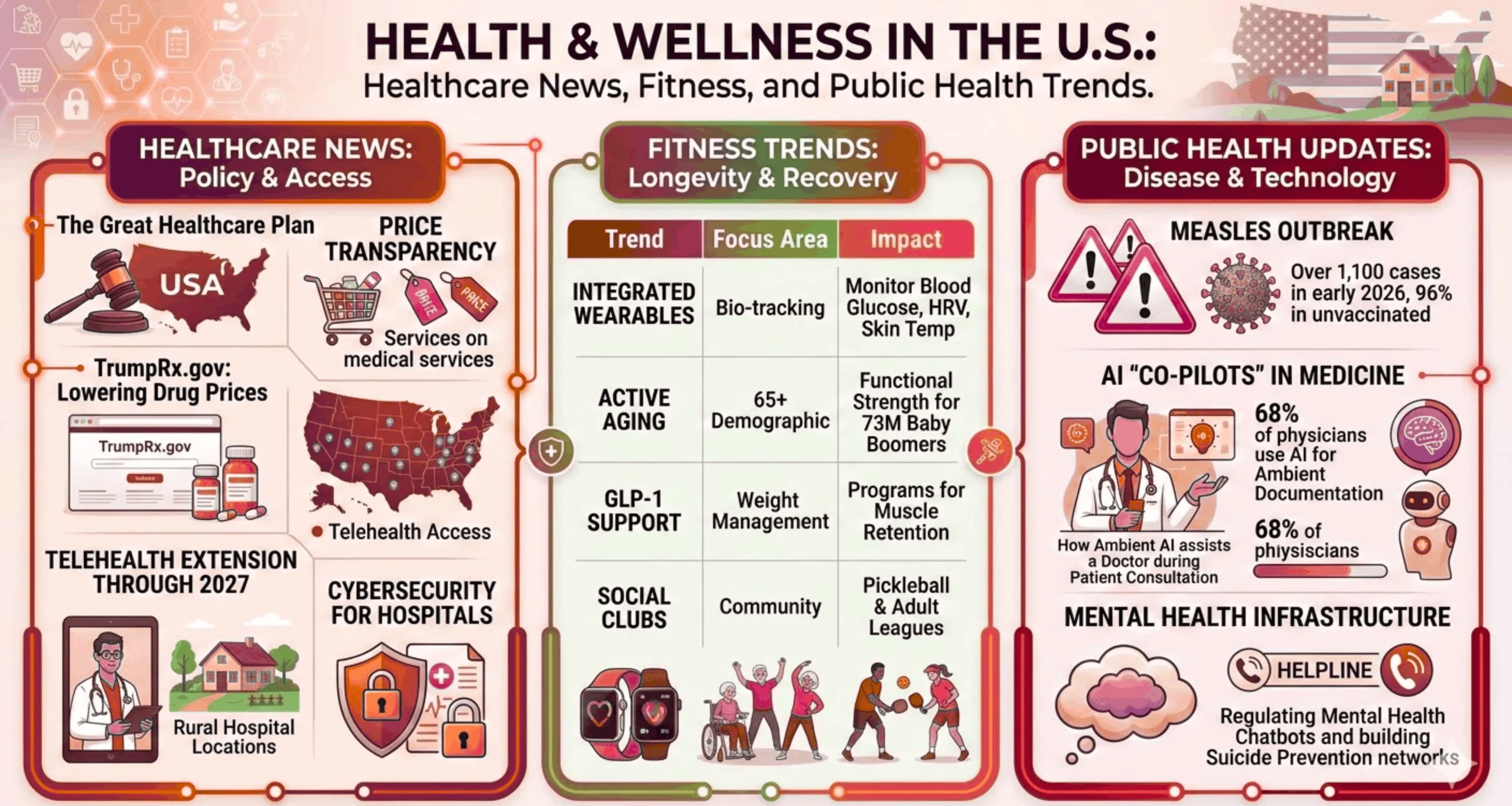
Health and wellness remain a major priority for millions of Americans as the country faces evolving healthcare policies, rising medical costs, and growing awareness of preventive health. In 2026, the U.S. health landscape is shaped by policy reforms, digital health innovation, and changing lifestyle habits.
The Current State of Healthcare in the United States
The U.S. healthcare system is undergoing significant transformation. Experts report that rising medical costs, increased demand for specialized treatments, and aging populations are placing pressure on healthcare providers and insurers. Industry margins have already declined from about 11.2% in 2019 to 8.9% in 2024, highlighting the financial challenges facing healthcare organizations. Source.
Healthcare affordability is also becoming a key concern for Americans. Recent reports suggest that health insurance premiums on Affordable Care Act marketplaces could rise significantly in the coming years, adding financial pressure for families seeking coverage.
At the same time, policymakers and healthcare leaders are working to modernize systems using digital tools, telemedicine, and data-driven care models to improve access and efficiency.
Major Healthcare Policy Updates in 2026
1. Cybersecurity Legislation for Healthcare Systems
Healthcare cybersecurity has become a national priority following major cyberattacks on healthcare infrastructure. In 2026, U.S. lawmakers introduced new legislation designed to strengthen cybersecurity protections across hospitals and healthcare providers after previous cyber incidents disrupted medical services and exposed patient records.
These proposed regulations aim to improve system resilience, protect sensitive medical data, and ensure continuity of patient care during cyber emergencies.
2. Changes in Preventive Health Policy
Preventive healthcare programs are also under discussion. The U.S. Preventive Services Task Force, responsible for recommending screenings and preventive treatments covered by insurance, has faced delays in its meetings, raising concerns among public health experts about the future of free preventive services.
Preventive care—including cancer screenings, vaccines, and chronic disease management—remains a cornerstone of public health strategies aimed at reducing long-term healthcare costs.
3. Nutrition Education Reforms
Another major development involves a national push to improve nutrition education in medical schools. More than 50 U.S. medical schools have committed to providing around 40 hours of nutrition training for future doctors, aiming to strengthen the role of diet and lifestyle in disease prevention.
Public health experts believe stronger nutrition education could help address chronic illnesses such as diabetes, heart disease, and obesity.
Public Health Challenges in America
Obesity and Chronic Diseases
Obesity remains one of the most significant public health challenges in the United States. According to recent health data, about 40.3% of American adults are considered obese.
Childhood obesity is also a growing concern, with approximately 22.9% of adolescents aged 12–19 affected.
Public health officials link these trends to sedentary lifestyles, highly processed foods, and limited access to healthy nutrition in certain communities.
Mental Health Awareness
Mental health is another important focus in the U.S. healthcare conversation. Rising stress levels, social isolation, and economic pressures have increased demand for therapy, counseling, and mental health services. Policymakers are currently evaluating regulations that could impact access to mental health treatment nationwide.
Organizations and healthcare professionals are advocating for expanded mental health coverage and improved support systems across the country.
Fitness and Wellness Trends in the U.S.
Americans are increasingly focusing on fitness and healthy lifestyles as part of preventive healthcare. Surveys show that more than half of U.S. adults plan to set health or fitness goals in 2026, making wellness the most common New Year’s resolution.
Wearable Health Technology
Wearable devices such as smartwatches and fitness trackers are becoming essential tools for health monitoring. Nearly half of American adults now use wearable technology to track steps, heart rate, sleep patterns, and physical activity.
These devices help users monitor their health in real time and encourage healthier habits through personalized data insights.
Exercise as a Social Lifestyle
Fitness is also evolving into a social activity. Experts highlight the rise of gyms and wellness centers serving as “third spaces”—places where people gather for exercise, social interaction, and mental well-being outside home and work environments.
Holistic Wellness Approaches
Modern wellness trends emphasize a holistic approach that includes physical activity, balanced nutrition, adequate sleep, and stress management. Many Americans are embracing mindfulness practices such as meditation and yoga to improve overall mental health and resilience.
The Role of Technology in Modern Healthcare
Digital health technologies are transforming how Americans access medical care. Telehealth services, mobile health apps, and AI-driven diagnostics are making healthcare more accessible and personalized. Healthcare experts predict that digital tools will continue to play a major role in disease monitoring, preventive care, and remote patient management in the coming years.
How Americans Can Improve Their Health and Wellness
Although healthcare systems and policies play a major role, individuals can also take steps to improve their health. Some effective strategies include:
- Maintaining a balanced diet rich in fruits, vegetables, and whole grains
- Engaging in regular physical activity such as walking, strength training, or cycling
- Getting at least 7–8 hours of sleep per night
- Managing stress through meditation or relaxation techniques
- Scheduling regular medical checkups and preventive screenings
These lifestyle habits can significantly reduce the risk of chronic diseases and improve overall quality of life.
Conclusion
Health and wellness in the United States continue to evolve as policymakers, healthcare providers, and individuals work together to address emerging challenges. Rising healthcare costs, chronic disease rates, and mental health concerns highlight the importance of preventive care and healthier lifestyles.
At the same time, innovations in digital health, fitness technology, and medical education are creating new opportunities to improve public health outcomes. By staying informed about healthcare developments and adopting healthier daily habits, Americans can take meaningful steps toward better long-term wellness.
